Christian targets.

Last week I overheard a conversation between Kenyan Christians and Nigerian Christians about decisions they would have had to make when people they know are targetted to die because they are Christians. What kind of world they want to create by their response?

A lot of Christians in the United States claim that they are also targeted by opponents.  Some see in this a growing “persecution.” Continue reading “Christian targets.”

Refugees, the migration crisis and gifts from God

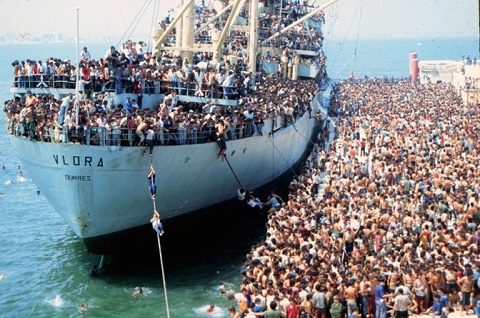
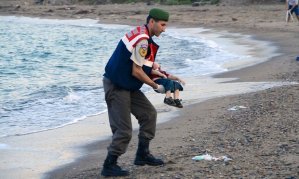
That picture this week of the body of a three year old Syrian boy washed up on the beach in Turkey broke our hearts.  2464When his family’s petition to migrate to Canada was turned down, they found hope only in using other means to try to move on.   Those (we) who had the means to help we did not reach out to them.  And now we feel guilty.  And everyone suffered a loss.

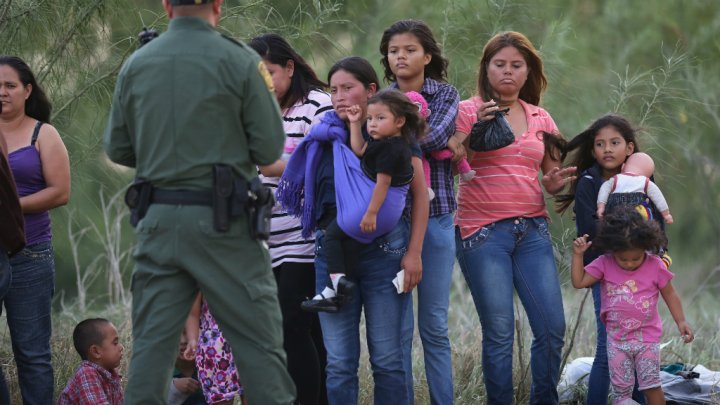
It seems like we are all afraid to lose something by accepting refugee immigration.  For those of us who are already stable here, it feels like a loss and, in the context of global terrorism, it can make us more vulnerable.  We sometimes fear immigrants exploit our prosperity and that we will lose our “way of life”.

The loss, of course, is greater for refugees. Continue reading “Refugees, the migration crisis and gifts from God”

Language of the colonialists

Reflections on my way back from Southern Africa.

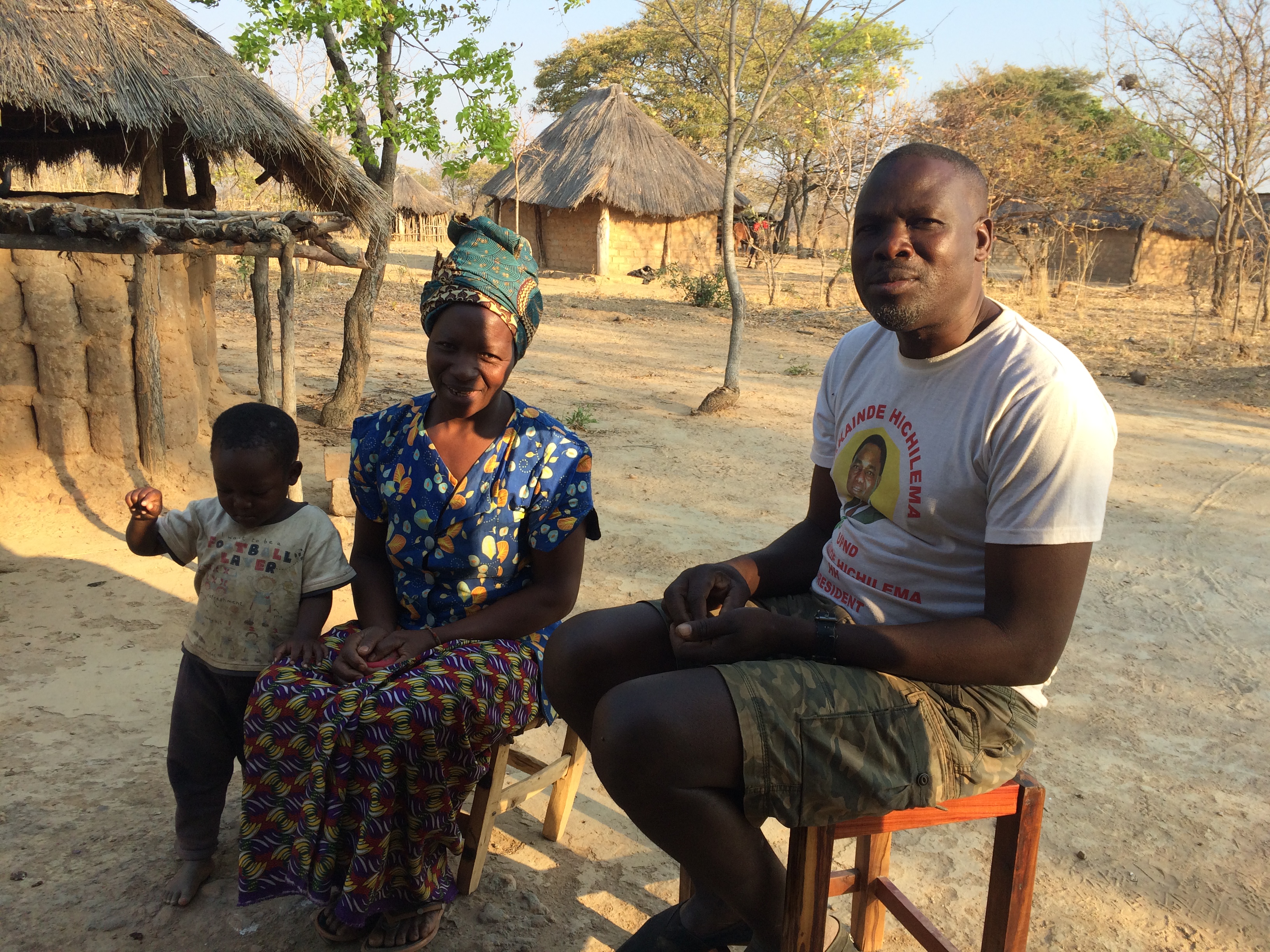
While I was in Zambia, I visited the village of Mantanyani with Johanna Rohde, a long-time friend of our daughter Emily who is working there with Peace Corps.  I was struck with the gentle leadership of the village provided by Elliot the Headman, who appears here with his wife Silvia.  IMG_3461His job and heartfelt commitment is the well-being of the people of his village.

Johanna and I took a side trip to Victoria Falls and the Zambezi River, where I was struck by the huge contrast between the everyday live of Mantanyani compared to the very European/American tourist life around Victoria Falls. IMG_3470It is easy o see here how Colonialism has enduring effects on the the lives of people even though the legal formations of the colonial empire have been removed.

In my visit to Zambia and Victoria Falls, I witnessed first-hand how the enduring power of colonialism continues to define the relation of people to other people, and to keep us Northern Europeans in positions of power (and being waited upon). I felt ashamed that I have not worked harder for justice. What will it take to make it possible for the world to be enriched by the contributions of people and their languages that have been pushed to the margins? Their marginalization is colored by those who have claimed to be at the center or by those who, like me, are located in a “center” we were born into. Our experiences of the world are supported by others who were born at the “margins” as defined by that center.

Victoria Falls appears more like a site in European History, than as a location in African geography. It’s full of white people enjoying the Falls and the stories about Livingstone and the colonial period, while being served by Zambians who cannot afford to enjoy the place.

I am hoping someday humanity will find a way to communicate with each other that will reflect better the languages in which humans know and serve the King of all the earth. Meanwhile we seem to be stuck using the language of the colonialists. Here I am writing in English.

God Bless America.

Thursday is my favorite day of the week.

All day, I look forward to my evening class at a local seminary. I teach in Spanish to 12 hard working immigrants and we are looking at the first five books of the Bible.  I sometimes post things for my students on this site.

We use Spanish in the class, but Spanish is a second language for nearly half of us.

Five of my students learned a Mayan language from their mothers. There are 30+ Mayan Continue reading “God Bless America.”

Thinking clearly — in Caesaria Phillipi.

When I think I see clearly, that is when I am most at risk.  Clarity is overrated. It’s not useful fuel for that “inner light”, nor is it a good guide our choices.

I obviously have a problem with pride. I find it hard to tell pride from a victory that needs celebrating.  When I feel self-satisfied, it can be predictive of something destructive that affects me and people around me. I can tell when I come home and tell Lois what happened–she’ll know if we should celebrate or if I am bragging.   I still need to learn how to enjoy the victories, but not to make a big deal of them. Since it is always God who empowers, the victories can be meaningful.  I should be able to accept the gift, and move on.

So it is when we think we see clearly.  It is easy to get overconfident in our ability to live by what we see.  It doesn’t take long before we start acting stupid. Last year, my favorite baseball team, each time they started reading good press about them, seemed to start loosing games that they should have won. Then they got into a slump the couldn’t get out of.

Seeing clearly is no preparation for the un-expected, out-of-our-control transformative events by which the story moves forward.

So it was for Peter, James and John in Mark 8:22-9:41

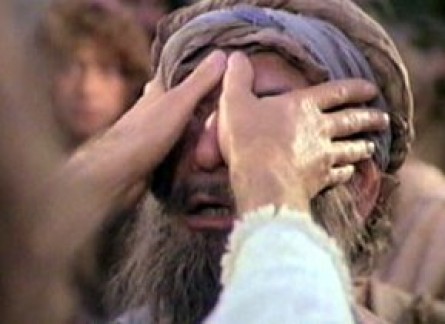
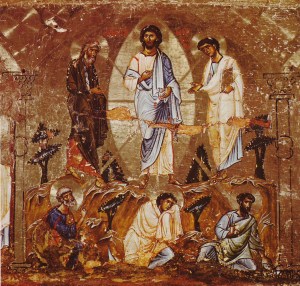
I almost put pictures in here to draw readers into the story of the disciples seeing clearly.  But the pictures that are on the internet made it hard to identify myself with the story.  I need to see myself in that progression in which their eyes were opened, they understood about Jesus, and then they got all hung up with being the smart ones — “who is the greatest?”.  The problem is that in all the pictures on the internet they are wearing ROBES! Even when I get out of the shower–let alone when I interview for a job–I don’t wear a robe.  

jesus_heals_blind_man2 peters-confession Transfiguration_of_Christ_Icon_Sinai_12th_centurychild1

Truth and Easter week

In a world of Liquid Culture, many evangelicals, particularly in the USA and Europe, are protesting that “truth” is losing out.  Some, particularly moved by their concern, “take a stand” to “fight for the truth.”

In a week that focuses on the death of Jesus it is appropriate to think about truth in relation to his death.  The night before he had Jesus executed  Pilate asked Jesus:  “what is truth?”

Many different opinions about how to answer that question, and why it matters come down to us through the ages. The question came up again this week also in the context of the death of Jesus.

Bill O’Reilly’s book, “Killing Jesus”, now made into a documentary, caused a reader of the review of the film, in Sojourners to make the connection again.  One person asked  whether the Muslim actor who played Jesus is “still a practicing Muslim or is he a Muslim converted to Christianity” and she pointed out that it was important to her because the film was “done by Bill O’Reilly I worry its not a truthful depiction of our Savior.”

In the text about Pilate:  Jesus does not use words to answer Pilate’s question.  Pilate is, rather, portrayed as asking his question in response.  Jesus has already said that he came to bear witness to the truth.

Pilate questions Jesus’ claim to “bear witness to the truth.”  Is he making his own claim on truth?  Was Pilate turning truth into a philosophical idea:  timeless and valid everywhere?

Pilate may have been revealing his ideas about truth—that truth is a function of power, or that it is propositional.  But neither of these options is consistent with what John, the author of this gospel, seems to want us to get out of this story.

First of all, if Pilate is asserting his power to define the truth, he fails.  Pilate is remembered beyond the time and place of his question, not because he represented the power of the Roman occupation of the Jewish homeland, but because he executed one who claimed to be the Jewish Messiah.  He is remembered not by how he would have answered the question, but because of what happens next regarding Jesus’ claim to the truth and to his Messiahship.

Second, no answer to Pilate’s question appears as a propositional statement that can impose itself on all times and all places. This story about Jesus, just like all the other ones in the gospel, is selected to tell what happened at a particular time and a particular place. John tells us that his intention is to tell events as a “testimony” to the truth.

Neither Jesus nor John gets philosophical about truth. Rather, John says on the witness stand of history, that  Jesus truly accomplishes something when he is executed, and that we should pay attention to that.

Since Jesus was the Jewish Messiah, perhaps this quote from Rabbi Jonathan Sacks might help us in our own pursuit of truth:

“Biblical truth, [is] a truth that cannot emerge at once but only through the experience of formative events, is a movement from acts done by God for the sake of human beings, to acts done by human beings for the sake of God.” To Heal a Fractured World p. 157

John is inviting us into this story, in which the truth is in the outcome: God does what God says he will do, despite all the ways power and the powerful conspire against him.   And that is better than what we can say about ourselves.


Representing Protestantism in Latin America

Representation is a way of structuring knowledge.  A recent report on Religion in Latin America, the Pew Research Center does just that, by structuring a story of religious change in Latin America as if the fundamental move Latin Americans is from Catholic practices to Protestant beliefs.  This representation was also published in Spanish and Portuguese.

As far as doing what a representation should do, this report is already “structuring knowledge” as is evident by the many citations in magazines and newspapers. Christianity Today entitled its blog post Here’s What Protestants in 18 Latin American Countries Believe and Practice.  AP place on the newswire information that Latin America Catholics steadily leave faith.  Some Latin American evangelicals and some American missionaries have used it as if it is a call to a victory celebration.

Knowledge of phenomena is necessarily limited and includes with in it, the perspective from which it is viewed.  Representations are like photographs.  Only part of the scene is captured, and only from the perspective of the lens.  What is left out, how much the picture was posed or staged, why the particular part of the event/scene was chosen, are lost.  Other photographs may portray an event in an entirely different, maybe even contradictory, light.  Neither is false, but neither is true, either.  Representations do have real effects, though.  So the work of structuring knowledge can be evaluated as to whether it is done responsibly as much as it is evaluated by how accurate it is.

Pew’s representation of Religion in Latin America is structured to portray a knowledge to US Americans who suffer from the idea that Latin America is monolithically Roman Catholic.  That idea was never really really true, and it is less true today than it ever was, despite the selection of a Latin American as Pope Francis.   The structure of the knowledge presented in the report is aimed at people who are woefully uninformed about religion in Latin America.  It is aimed at correcting American myths and misconceptions.  In that sense the report takes its responsibility seriously.

But the way it also structures the information in ways that promote many more misconceptions.

A more complete reflection of the issues and dynamics that move Latin Americans religiously might have been more accurate and more responsible at the same time. The use of the identities “Catholic” and “Protestant” is where the report’s problems begin. The only indication it gives that Catholic and Protestant might not actually reflect the full spectrum of religion as actually lived and engaged by Latin Americans was a “tip of the hat” to Afro-Caribbean practices. The report does not even acknowledge the huge new movements that are neither Catholic nor Protestant: IURD — Universal Church of the Kingdom of God, for example, the veneration of Guadalupe, or the resurgence of pre-colombian spiritualities.

It is lacking in criteria for answering “What drives religious practice and change in Latin America?”  More useful might be an answer the question: “what difference does Latin American Christianity make for the world?”

In this report, Latin America is portrayed as a continent in the process of adapting to global categories, rather than a continent that creates new categories and has a voice in the religious experience and commitments of all humanity. This bias is particularly evident when it uses “US Hispanics” in a way that implies that Latin Americans realign their beliefs when they come to the USA, rather than exploring the influence of Latin American Christianity on the religion of all in USA.

Thinking about what drives me….

I am intuitive

I am at home in Latin America

I am very aware of the world and its issues:  politics, economy, geography, travel

I am a networker—a connector of people

My people skills include:

  • Listening
  • Affirming goals and visions of others, helping them turn those into effective action.
  • Able to say: “I am on your side.”
  • Encourager.  I take Barnabas’ ministry as my model.

I am usually workin on multiple projects and to think and plan strategically about several at the same time.

I get involved in visions before they turn into projects (i.e., before they become concrete), and I can work on them until they turn into proposals.

I have good insight into political and administrative relationships, combining savvy with a definite impatience for getting through to resolution.

Change is a big part of who I am and the way I live.  I am adaptable.  I want to change the world.  I am idealistic and process oriented.

I am comfortable among the very poor and I have not found it difficult to slip in an out of politically tense situations.

I grow by connecting.  Latin American Christians have changed my life.

Muslim and Christian intolerance

The title is scary, when read alongside the evening news these days.  Does ISIS agree?  Europe, Globalization, and the Coming Universal Caliphate was written before most of us in the USA had much of an idea about what a “Caliphate” is (though arguably, “Caliphate” is embedded in the name of my state, “California”.   Bat Ye’or published the book in 2011.

Bat Ye’or’s particular reading of Islam has had a strong influence on Americans.  She was a “young Jewish woman forced to leave her native Egype as the Jewish community which had existed in that country for over 2600 years came to an end.”

Bat Ye’or is known for challenging the mainstream portrayal of how non-Muslims are tolerated in Islamic countries.  She is particularly interested in researching whether Jews were treated with more toleration in Islamic countries than in countries under Christian rule.  Bat Ye’or takes a contrary stance against “the orthodox view is that both Jews and Chrsitains in return for being ‘protected people’ by Muslims accepted their subordinate status as second class subjects and the restrictions, taxed at highter rates that those for Muslims, tolls and customs duties.” (viii).   For her, this is a myth that begain in the Ottoman empire when it proclaimed itself “tolerant” and the best choice for ruling Christians in Balkans.  Ye’or claims that Jews were held in the condition of “insecurity, humiliation, and subjection to a repressive system of rule over them.”

She locates the cause for a fundamental intolerance in the Islamic doctrine and justiriction of jihad the struggle or holy war, which is “central to the development of Islamic countries and to the requiredment to spread Islam throughout the world by peaceful means or by war.  She draws, as well, on the doctrine that the Dar al-Islam must overcome the Dar al-Harb.  “Perpetual war against those who will not submit to Islam”

In Eurabia:  the Euro-Arab Axis (2005) she suggests that Islam is exercising increasing influence on European political and social life, beginning “in 1973 with informal alliances between the then nine countries of the European Community…and the Mediterranean Arab States.”  And she locates the influence in an ambience of “cooperation and collaboration by Europeans and Arabs.”   She predicts that the outcome will be that Europe “will be lost to Islam…Eurabia is thus the enemy of Europe.”(x)

I agree that it is important to interrogate the idea of “tolerance” especially if the interrogation can inform efforts toward human equality, and religious freedom to practice and propagate.  It is much more problematic to attempt to compare the tolerance of Jews by Christians against the tolerance of Jews by Muslims — and this appears to be a core issue/question that Ye’or wants to answer in her work.  At one level, I don’t think the comparison is really possible, because the definitions of Muslim nations and of Christian nations are not stable.  The comparison is not practical.  For example:  what is Christian?  How faithful is a nation to what it means to be Christian?  Was Hitler’s Germany Christian–particularly when it attempted to destroy European Judaism?  It certainly isn’t Muslim (though it had the support of many Arab Muslims in the Middle East during WWII, but more based Levantine Arab desire to be free of the British Mandate — the beginnings of the end of the British Empire which, by the way, had other manifestations in other colonies during the war, leading to the devolution of the Empire).  I am sure that the same level of complication must pertain in the relation of Muslim nations to some concept of Islam, and to the relation of Jews to Islamic rule.

The practical difficulty of comparison does not end there.  I have only made a cursory read of a couple of books by Ye’or, but it seems apparent that she assumes the bordered and governed idea of the modern Nation-State when she talks about “Muslim countries” or “Christian countries”.  In reality, “countries,” as such, were not the form of political rule–with policies enforced within a structure of borders and citizenship–that pertained during most of the period within her well documented The Dhimmi (1980).  Since her focus is mostly on Ottoman Islam, this is particularly important because she seems to be comparing the semi-tolerance, with huge inconsistencies and major inequalities of the Ottoman Empire, with the modern secular states in the West that have chosen to tolerate all the religions as equals.    But, if she were to compare the Ottomans with, for example, the Spanish at the time of the Reconquista in Spain, the comparison would be more favorable to the Ottomans — at least that is how the ethnically cleansed Jews of Spain voted with their feet when they were removed from Spain and moved to various places in the Ottoman Empire.  At that time, part of the Muslim World, at least, was safer than Christian Spain.   A glance at the table of Contents of The Dhimmi shows a big gap in the historical documentation.  It skips from the 13th to the 18th Centrury, at least in relation to the Ottoman’s which is, arguably, the Islamic territory where Jews (and Christians) were more likely to be found.   There are only two references to Sephardic Jews, many of whom moved to Arab and Muslim contexts in the Ottoman Empire during the period that is blanked out.   I am not well versed, but recently aware of Arab Jews.  What I think I understand is this: for centuries Jews were part of Arab societies.  When Arabs migrated to the Americas at the end of the 19th Century, a significant enough number of them were Jews and the expat organizations in South America, at least, did not differentiate, as if Jews could not be included as Arabs.   The separation of the two semitic identities took place in the face of two historical moments related to the establishment of the State of Israel.  First, the Arab-Israeli conflict over the land, was re-stated as an Arab-Jew conflict.  Zionists, drawing on the memory of the Holocaust asserted that Jews have long been marginalized in every society, and that they had to protect themselves from being wiped off the face of the earth.  To do that, they, very effectively, tied the existence of Israel to Jewish identity.  When Israel entered into conflict with the Arabs over the land, it produced new conditions whereby “Arab” came to mean “anti-Jew” (This, by the way, is a change in the meaning of “anti-semitism.” Previously, it referred to someone who hated both Jews and Arabs alike).  Second, the longing of Jews to return to “the land” was ignited at the establishment of a jewish State of Israel, and many Arab Jews, from Morocco, Algerial, Libya, Yemen, and other Arab places, chose to migrate to Israel, and vacated the Jewish communities in the Arab World.

These historical moments, and many others throughout the centuries are important moments in which tolerance or intolerance was practiced, by both Muslims and Christians toward Jews, but they do not define whether Christians or Muslims are, by nature and by conviction, more or less tolerant than the other.  Sometimes Muslims protected Jews from Christians and, if we are to believe Bat Ye’or, even more times, Christians protected Jews from Muslims.  Since all these moments are contingent and negotiated, I think that all they really tell us about Christianity and Islam is where they were on the path each too vis a vis Jews.  We are now in a historically contingent moment, and we stand in a particular place in relation to Christianity and Islam — and it is obvious that Israel and Judaism continue to have to deal with both Christans and Muslims, along with their own internal differences.  The story of the relation between the three is useful, perhaps, to understand the divisions and the connections created by that history that affect their present ability to act and their disposition to act with justice in the present and do whatever they can to define what they think is a better future, and to produce it.

As I said above, I am not sure the “comparison game” actually establishes anything.  It is not just that there are too many variables, rather it assumes that Christianity and Islam are “things” that can be examined, and that give the same answers now and here, as they do there and then. It assumes that they have constant and consistent effects, and are not themselves sites of contestation and contingency.  They are actually in contestation with each other and with Judaism, and the outcomes are contingent on so many factors.  It does make me think, though, when I read in the paper that Christians are being wiped out in towns in Northern Iraq, where they, and their ancestors, have lived, believed and practiced Christian faith (mainly under Islamic regimes) for nearly 1800 years.  And it brings up (in)tolerance.  Certainly the moment is a moment of intolerance–and of ethnic cleansing. But the long story is as story of 1800 years of survival.  That is a long time for any movement or community to survive.  A certain amount of tolerance had to have permitted and actually contributed to those 1800 years.  On the other hand, the idea of ethnic cleansing seems like it may have been invented in Europe.  It certainly happened much earlier there:  in 1492 the Jews were removed from Spain.  Muslims were forced to convert or leave. Then in 1609, the descendants of those who had converted were also forced to leave.  But now, Jews and Muslims are being invited back.  So, in the present, perhaps all we can say is that it seems like Christian or, perhaps more accurately, secular regimes — of nation states — seem to have decided that it is OK to have, within their borders, people with differing, and even conflicting, sets of religious beliefs and practices, than present day Muslim ones.  Who knows if that commitment will last.

Religious genocide outcries

Outcry about Christians being wiped out in Iraq and Syria.  I have prayed asking God for ways to protect them, particularly the children.  I have even wondered if the long history of persecution of Christians might ever reach me, and what would I do?

Outcry about Israeli children killed by Hamas missiles.  Jews have experienced persecution and genocide over and over again throughout history.   Israelis feel threatened by the bombs and rhetoric of Hamas, especially when innocent Israeli children are killed.  They don’t want to be victims any more.

What surprises me right now, though, is that in many places in the world it is Muslims who are being massacred.  I don’t hear any outcry about Muslims who are victimized.    Why the silence?